Three Years to Redundancy? A Surgeon’s Reality Check on Robotics and AI
Three Years to Redundancy? A Surgeon’s Reality Check on Robotics and AI
.png)
In a recent interview, Elon Musk was asked how long it would be before robotic surgeons could outperform the top surgeons of today. His answer… “3 years” 1. He was referring specifically to Optimus, the humanoid robot being developed by Tesla, and went on to say that applying to medical school today is “pointless”.
As a doctor going through surgical training, this claim initially made me laugh, as it reinforced the disconnect between the sensational expectations of today’s tech leaders and the reality of day-to-day clinical practice. However, as the co-founder and CEO of Tesla, he clearly knows a thing or two about frontier tech.
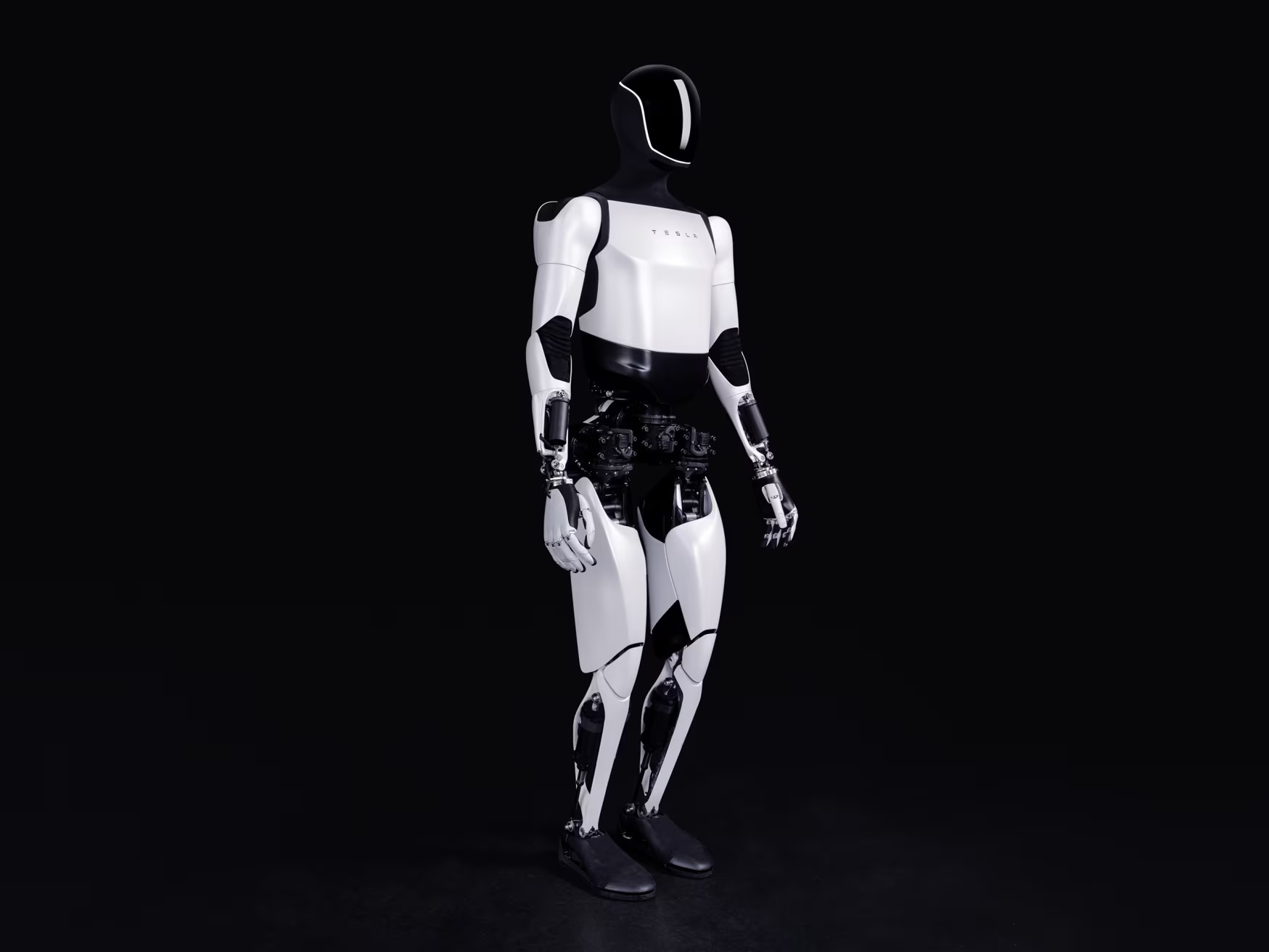
So, rather than just dismissing his opinion, let’s instead take a deep dive into the world of robotics and artificial intelligence (AI) in surgery – the two key technologies required to realise this vision of autonomous surgeons. We will ground this discussion by first describing how these technologies are currently used in clinical practice. We will then move on to explore some of the most promising areas of research and how they could transform surgery over the coming years, and whether surgeons are in fact on the brink of redundancy.
A few quick definitions before we begin. Robots are programmable machines capable of carrying out complex actions. Artificial intelligence (AI) is the ability of machines to perform tasks that require human-level intelligence, such as learning, problem-solving, reasoning, and so forth. So, one can see that the unbridled advancement of these two fields could indeed lead to the development of a humanoid surgical robot with unmatched technical skill and dexterity, guided by an AI mind with supreme surgical knowledge and decision-making capabilities.
In practice, however, these technologies have evolved along distinct trajectories. Understanding this context is essential for distinguishing credible claims of forthcoming progress from far-fetched timelines.
Robotics and AI in Surgery: The Reality Today
Robots first entered the surgical market in the late 1990s, with the landmark da Vinci System coming in 2000. Since then, nearly 18 million operations have been performed with robotic-assisted surgery (RAS) worldwide, with over 2.68 million in 2024 alone2. RAS is now performed in over 150 UK hospitals, with particularly high use in urology, and increasing use in colorectal surgery, gynaecology, and orthopaedics2.
The government is betting heavily on robotic surgery to reduce waiting lists. Mr John McGrath, consultant surgeon and chair of the NHS steering committee on RAS, has stated how the shortened recovery times and reduced hospital stays associated with RAS offer considerable potential for "relieving pressure on services and therefore helping to reduce waiting times"3.
So, are the robotic surgeons already walking among us? No. The term assisted is key in defining robotic-assisted surgery. Today, all robots used in the delivery of surgical care are wholly operated by a trained surgeon.
This is reflected by the Royal College of Surgeons of England publishing a new national framework for RAS in December 2025, ‘Robotic-assisted surgery – a pathway to the future’2. This document sets out a series of recommendations for the safe, effective and sustainable use of RAS in the UK, with a particular focusing on ensuring surgeons receive appropriate RAS training and oversight.
So, the reality is that the surgical community is actively embracing advances in robotic surgery and is working diligently to ensure these technologies are effectively integrated into surgical practice.
The utilisation of AI in surgery is comparatively nascent. The modern AI era began in the 2010s with the deep learning revolution, powered by big data, increased compute, and better algorithms. The announcement of the Transformer architecture by Google in 2017 marked a seismic shift, laying the groundwork for large language models (LLMs) such as OpenAI’s ChatGPT, whose public debut in November 2022 shocked society with its capabilities.
However, despite widespread adoption across other industries, AI has yet to exert a substantial impact on routine surgical practice. Today, AI in surgery is almost exclusively narrow, task-specific, and advisory, with most applications sitting upstream from the operating theatre, mostly concentrated in medical imaging. For example, AI systems currently deployed in the NHS include Heart Flow FFR-CT, a cloud-based platform enabling non-invasive pre-operative planning for coronary interventions, as well as real-time detection systems used in colonoscopy to alert clinicians to potentially cancerous polyps during the procedure.
Importantly, these systems do not act autonomously: they neither decide nor intervene without a human clinician retaining full responsibility.
However, the application of AI in surgery extends well beyond systems that directly diagnose or treat patients. These applications include AI-enabled platforms for surgical training and simulation, ambient AI scribes that automate clinical documentation, and the emergence of Smart Operating Theatres (as highlighted in a Future Medicine piece last year).
Like RAS, the NHS views advances in AI as a key lever for improving efficiency and productivity, with the transition from “analogue to digital” identified as a core structural shift in the NHS 10-Year Plan, published last year4. While the plan offers limited granularity on how this transition will be implemented in clinical practice, resistance from the surgical community is unlikely to be a major barrier.
Surgeons are often described as being cautiously supportive towards AI, and a recent international survey of surgeons supports this – 53% expressed significant concern about potential ethical issues around the use of AI in surgery; yet, 80% of surgeons believed AI would positively impact surgery, and 97% were willing to integrate AI into clinical practice5.
Emerging research in Surgical Robotics and AI
So, we can see that these technologies have largely developed along distinct trajectories, achieving clinical adoption without substantial integration with one another. This raises the question of whether these technologies have yet been meaningfully integrated to enable autonomous surgery.
Well, last year a team of researchers at John’s Hopkins published a paper in Science, describing the use of an AI framework called Hierarchical Surgical Robot Transformer (SRT-H), which executed autonomous surgery on porcine gallbladders via a Da Vinci surgical robot6. The novel AI model integrates perception, decision-making, and instrument control through a tiered architecture in which a high-level policy operates in natural language to plan surgical steps and issue corrective instructions, while a low-level policy translates these instructions into precise robotic actions.

The results were very impressive. In an ex-vivo setting, this system successfully performed the ‘clip and cut’ stage of a laparoscopic cholecystectomy, where the cystic artery and cystic duct are severed to allow the gallbladder to be removed from the body. After being trained on 34 ex-vivo gallbladders, the system achieved a 100% success rate at then performing this part of the operation on 8 unseen gallbladders, each with slightly different tissue appearance and anatomy. This was achieved with no human intervention.
Whilst this work represents a notable advance, it has several limitations regarding its translation to clinical practice. The transition from ex-vivo to in-vivo is extremely challenging, bringing several challenges like accessing the surgical site, addressing bleeding, and responding to unforeseen intraoperative events.
However, even if these obstacles were overcome, and the system’s capabilities extended reliably across all stages of an operation, would it then be adopted? Is technical success the only factor that should be considered?
The role of a surgeon is much more than operating, it is patient communication, ethical judgement, and shouldering responsibility. Even narrow robotic autonomy introduces profound regulatory, legal, and moral questions. At what threshold of performance do we allow robots to operate autonomously? Who is accountable when an AI makes a wrong decision if there is no human oversight?
These questions remain unresolved because removing humans from the loop undermines the foundational model of healthcare, the relationship between doctor and patient, within which responsibility, trust, and accountability are inseparable from clinical action. Society will inevitably have to reckon with these questions at some point, and healthcare regulators are likely to look to precedents set in other domains, such as transport, where comparable (though not identical) decisions regarding self-driving vehicles, are already coming to the fore.
In the face of this uncertainty, work on fully autonomous surgery has largely remained the domain of academic groups and a small number of technological mavericks. By contrast, the majority of HealthTech companies have focused on developing systems that augment, rather than replace, surgeons. Such approaches avoid many of the fundamental issues posed by full autonomy and offer clearer and faster routes to commercialisation by fitting within existing frameworks.
One area of research with the potential to profoundly disrupt the current surgical paradigm, is the emergence digital twins.
Digital twins are dynamic, virtual replicas of real-world objects. The term Digital Twin-Assisted Surgery (DTAS) was introduced by Lisa Asciak and colleagues in2025, describing the application of this concept to surgical patients7. Where robotic-assisted surgery (RAS) represents a physical extension of computer-assisted surgery (CAS), DTAS represents a computational one – designed to augment cognitive rather than manual capabilities through enhanced situational awareness and predictive modelling.
Let’s talk through a hypothetical case to understand how DTAS could be used in clinical practice. Michaelis is a 65-year-old man diagnosed with colon cancer following investigation of altered bowel habits. Data from laboratory tests, preoperative CT imaging, cardiopulmonary exercise testing, and tumour genomic profiling are integrated to construct a patient-specific digital twin.
Predictive AI models enable simulation of different surgical approaches, forecast responses to various chemotherapy regimens, and analyse blood-flow patterns to estimate the risk of anastomotic leak – a major surgical complication where there is a leak at the site where the bowel is joined back together. These insights are brought to a multidisciplinary team meeting, where there is a consensus agreement that Michael is a good candidate for a robotic-assisted colorectal resection.
In clinic, Michael’s surgeon explains the recommended treatment plan, outlining its rationale and risks, with Michael’s digital twin providing personalised predictions of postoperative recovery, helping to set realistic expectations following surgery. With his questions addressed and a clear understanding of the journey ahead, Michael agrees to proceed and is provided with a personalised exercise and nutrition programme to optimise his condition ahead of surgery.
In the operating theatre, the surgeon operates from a console, directing instrumented robotic arms that continuously stream visual and haptic feedback to both the surgeon and Michael’s digital twin. The augmented reality overlay on the surgical console highlights nearby vascular structures to prevent injury, while also assisting with lymph node identification and ensuring adequate resection margins.
Postoperatively, Michael's digital twin is regularly updated with his physiological parameters, alerting staff to potential complications including dehydration, infection, or the dreaded anastomotic leak. After discharge, smartwatch data, brief smartphone questionnaires, and any subsequent imaging continue to update the digital twin. The system compares observed recovery against expected trajectories, suggesting personalised strategies to support Michael’s rehabilitation.
While this care pathway initially appears to be science-fiction, many of the composite technologies exist today, but they exist in isolation, separated by poor data and software interoperability, and each carrying separate, sometimes sizable price tags. Indeed, the cost to develop an integrated, real-time, patient-specific digital twin system would be substantial.
Yet unlike the vision of autonomous surgeons operating without human oversight, this DTAS care pathway falls within our current societal model of healthcare, improving rather than replacing clinician-delivered care, while offering tangible improvements in patient experience and outcomes. Moreover, by providing a central computational scaffold that interfaces with a wide range of robotic and AI systems, the digital twin has the potential to catalyse a virtuous cycle of innovation – enabling shared learning across the care pathway, with system performance improving over time and delivering progressively greater clinical effectiveness and economic value.
The Future of Surgery
So, are surgeons on the brink of redundancy? No. Elon Musk’s three-year prediction conflates two very different trajectories: the rapid progress of AI and robotics in tightly controlled, industrial environments, and the far slower, more constrained evolution of technologies embedded within healthcare systems, shaped by complex clinical workflows, demanding regulatory frameworks, and above all patient safety.
Similar claims have been made before. In 2016, AI pioneer and subsequent Nobel laureate Geoffrey Hinton famously predicted that radiologists would be replaced by 2021. The reality is that over the last 5 years, the UK radiology workforce has continued to grow at approximately 5% per year – and Hinton has recently acknowledged that his timeline was wrong8,9.
You can apply to medical school today as an aspiring surgeon and there will be a surgical training post for you at the end – though securing it will require the same dedication it always has. However, that does not mean the job will be the same as it is today.
Surgery is constantly evolving. From Galen’s humours to Hunter’s anatomical observation and Lister’s antisepsis, each technological inflection point has reshaped the surgeon’s role. The advance of robotics and AI represents the next such inflection, exemplified by Michael’s DTAS journey, in which care is planned, delivered, and followed up with unprecedented foresight – reducing uncertainty, anticipating complications, and tailoring treatment to the individual. The UK government is actively investing in robotics and AI to address rising waiting lists and mounting financial pressures, while surgeons themselves have shown a clear willingness to adopt new technologies that demonstrably improve patient care.
If truly autonomous surgery does someday enter clinical practice, it's unlikely to resemble humanoid robots like Optimus independently wielding a scalpel. Instead, it will emerge through purpose-built surgical systems – tightly constrained, highly regulated, and embedded within a human-designed framework of care.
In the near- to medium-term, surgery will be defined not by replacement, but by collaboration: surgeons working alongside increasingly intelligent machines, using AI-enhanced tools to sharpen judgement and extend capability. At its core, surgical practice will remain fundamentally human, grounded inpatient-centred decision making, compassionate communication, and the trust between doctor and patient.
References
1 Harry Cockburn. Elon Musk says AI surgeons will be better than humans in just three years, <https://www.independent.co.uk/tech/elon-musk-ai-optimus-surgeons-b2897000.html> (2025).
2 Royal College of Surgeons of England. Robotic assisted surgery - A pathway to the future. (2025).
3 NHS England. Millions to benefit from NHS robot drive, <https://www.england.nhs.uk/2025/06/millions-to-benefit-from-nhs-robot-drive/> (2025).
4 Department of Health and Social Care. 10 Year Health Plan for England: fit for the future. (2025).
5 Arboit, L., Schneider, D. N., Collins, T. et al. Surgeons' awareness, expectations, and involvement with artificial intelligence: a survey pre and post the GPT era. Eur J Surg Oncol 51,110525 (2025). https://doi.org/10.1016/j.ejso.2025.110525
6 Kim, J. W., Chen, J.-T., Hansen, P. et al. SRT-H: A hierarchical framework for autonomous surgery via language-conditioned imitation learning. Science Robotics 10, eadt5254 (2025). https://doi.org/doi:10.1126/scirobotics.adt5254
7 Asciak, L., Kyeremeh, J., Luo, X. et al. Digital twin assisted surgery, concept, opportunities, and challenges. NPJ Digit Med 8, 32 (2025). https://doi.org/10.1038/s41746-024-01413-0
8 Royal College of Radiologists. 2024 Clinical Radiology Workforce Census, <https://www.rcr.ac.uk/news-policy/policy-reports-initiatives/clinical-radiology-census-reports/> (2024).
9 Steve Lohr. Your A.I. Radiologist Will Not Be With You Soon, <https://www.nytimes.com/2025/05/14/technology/ai-jobs-radiologists-mayo-clinic.html> (2025).
.png)
.png)
.png)